

A turning point is an event that inaugurates substantial change, such as the Battles of Hastings and Agincourt. The change is decisive – the future takes an unexpected path that would not have worked out otherwise. Its synonyms – climax, watershed, milestone – lack the critical element of ushering in something new, some new age that otherwise might not have been.
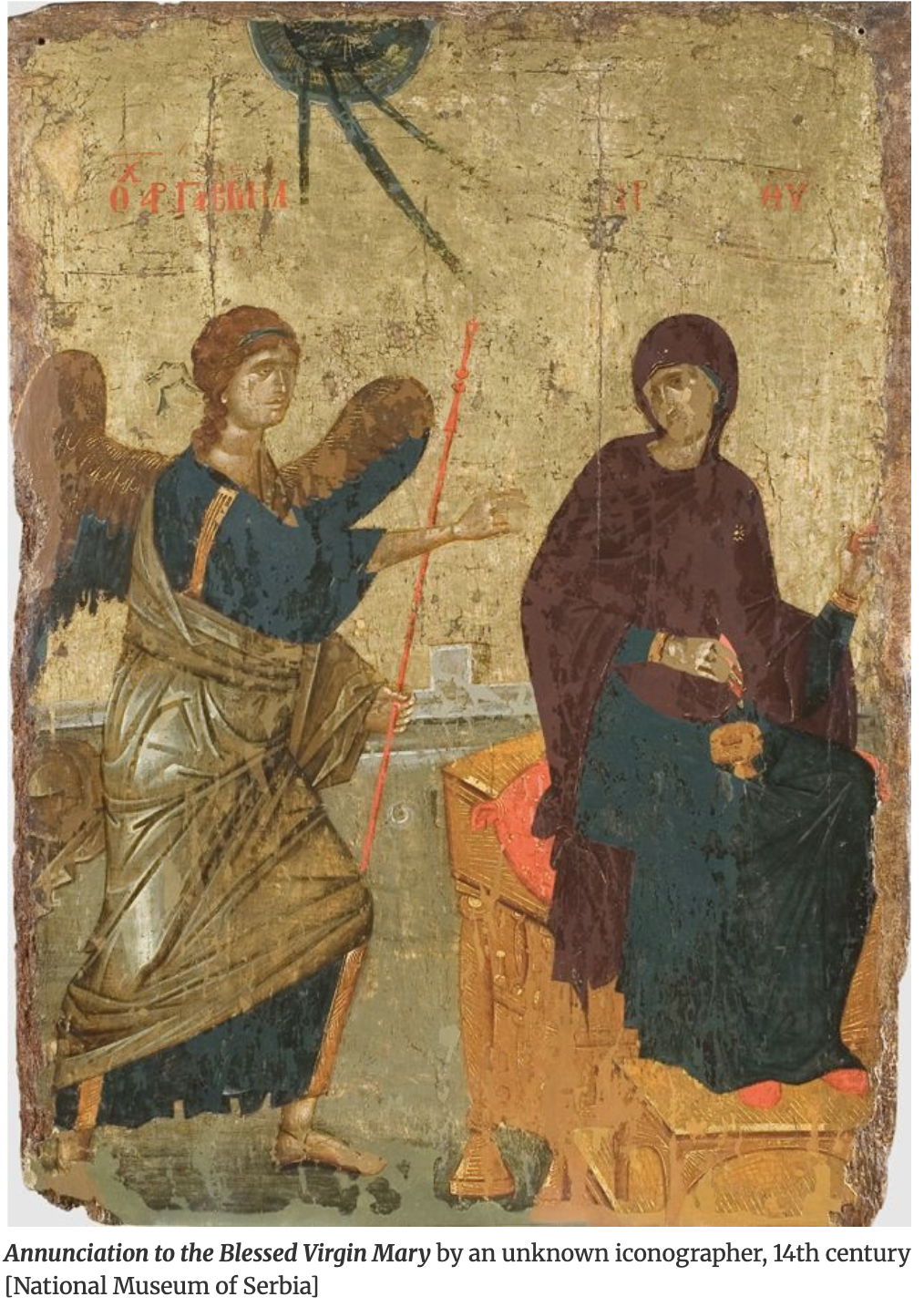
With Advent, we prepare for the biggest turning point the universe has ever seen: the Incarnation of the Son of God. The world was languishing in sin with no hope, no prospects for renewal. “All things are full of weariness,” laments the Book of Ecclesiastes. “What has been is what will be, and what has been done is what will be done; and there is nothing new under the sun.” (1:8-9)
The birth of Christ permanently altered the human story. No longer is there politics without a goal. No longer is there suffering without meaning. No longer is there death without the prospect of a greater life to come.
“Now we know the path that we human beings have to take in this world,” wrote Pope Benedict XVI in his magisterial, Jesus of Nazareth. “Jesus has brought God and with God the truth about our origin and destiny: faith, hope, and love. It is only because of our hardness of heart that we think this too little.”
Nonetheless, we cannot register a turning point until we see the endpoint, which provides the necessary distance and perspective for both seeing and evaluating the past. Advent helps us prepare for the universe’s turning point by beginning with the end point: the second Advent, the second coming of Christ. Because He will triumphantly come again to judge the living and the dead, we know that His first Advent turned the tide forever. God’s Anointed, destined to rule heaven and earth in splendour, is born in Bethlehem so that we may have life more abundantly.
In Christ, we know that evil is not the final word – though, alas, it still has more to say. From the wood of the crib to the wood of the Cross, He shows us the way. “If you follow the will of God,” continues Benedict, “you know that despite all the terrible things that happen to you, you will never lose a final refuge.” Jesus is Emanuel – God with us, through thick and thin, even when suffering tries to tear us apart.
The West’s calendar places the universe’s turning point at its centre. The years of antiquity are counted downwards until His Advent – the time “before Christ.” A new era dawned at His birth – the years of our Lord, anni Domini – and time is now counted forward. The years will cease when the second Advent dawns.
Turning points, however, are a matter of interpretation. Where the Christian sees the reconstitution of creation in Christ, nonbelievers see nothing. As these nonbelievers have gained power in the West, they have imposed their blindness on the calendar: rather than distinguish the years “BC/AD,” they insist on “BCE/CE,” that is, “Before the Common Era” and “Common Era,” counting the years in the same way, but with these senseless labels.
And they are senseless: there is nothing to distinguish the year 1 BCE from 1CE. Nothing happened to make the latter “common.” By a nonbeliever’s reckoning, those years are every bit as common as the ones before and after it. In fact, the BCE/CE system is a modern refashioning of the Book of Ecclesiastes: without Christ, there is nothing new under the sun.
It’s tempting to think that turning points in “some other game” don’t apply to some of us. Consider Saratoga and Gettysburg: we are nearly 250 and 160 years, respectively, removed, but our nation’s life – and consequently, are own lives – were inalterably shaped by the victories these battles made possible. Even the Super Bowl changed fortunes, financial and personal, with the outcome. This is even more true for the Incarnation, whose consequences remade every facet of our world from law, to government, to education, to family life, to leisure, to charitable works.
The Modern Project has been to find a new turning point of history that is not Christ. Perhaps it’s the Renaissance, or the Enlightenment, or the French Revolution, or the Industrial Revolution, or the Sexual Revolution. Each has produced new gods: individualism, freedom, democracy, money, pleasure.
None of these gods has liberated us from the fundamental problem of the world – human sin. Only God has done that. Practically speaking, the measurement of this impact has been limited owing to our hard hearts, as Benedict rightly observed. That is, sin still exists. But the measure of charity in the world – the love of spouses, of families, of the poor, of the orphaned, of the elderly – points to the God who changed the world by dwelling among us.
And He could do more if we only let Him. The Advent of God shows us the way: “Though he was in the form of God, [Christ Jesus] did not count equality with God a thing to be grasped, but emptied himself, taking the form of a servant, being born in the likeness of men.” (Philippians 2:6-7)
Christ’s self-emptying, His kenosis, in the Incarnation is the turning point of the universe. If we allow the Child in the manger to break our hard hearts, we can empty ourselves of pride and fill ourselves with His love. Then we will be able to follow Him to our end point: His Father’s House.








)%20(Instagram%20Post).png&command_2=resize&height_2=85 "House Championship and News")